 +
+
Quick Answer
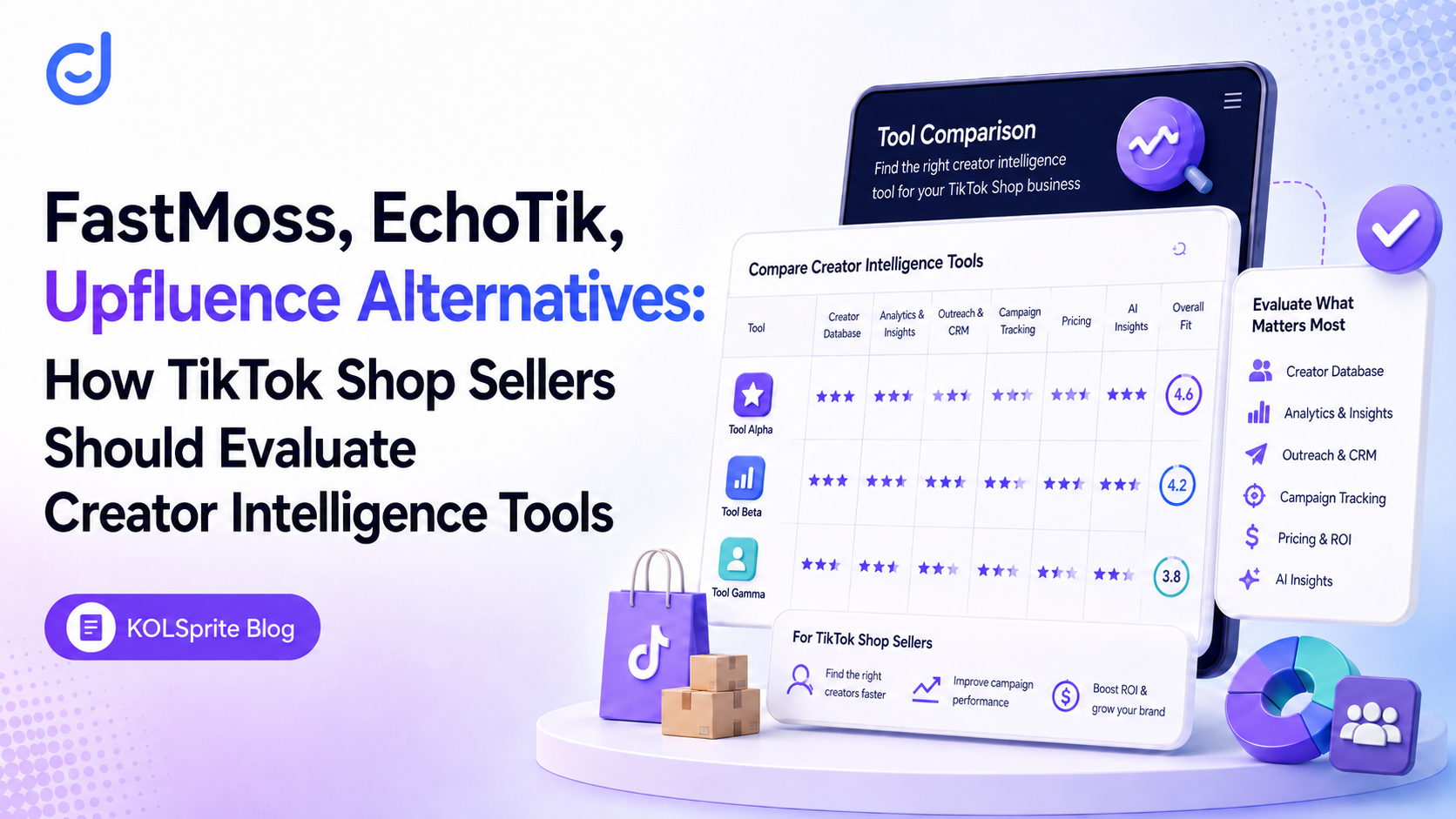
When evaluating FastMoss, EchoTik, Upfluence, CreatorIQ, GRIN, or other alternatives, TikTok Shop sellers should look beyond database size. The strongest creator intelligence tool should connect creator search, product-category fit, outreach workflow, content insights, and campaign tracking in one repeatable operating process.
Why Alternative Searches Matter
Buyers searching for FastMoss alternatives, EchoTik alternatives, Upfluence alternatives, or CreatorIQ alternatives are usually not at the top of the funnel. They already know they need creator or influencer data. The real question is which platform helps them operate better.
For TikTok Shop sellers, the buying decision should not be framed only around who has the largest database. The more important question is whether the platform supports the full workflow from creator discovery to campaign decisions.
Evaluation Criteria for Creator Intelligence Tools
| Criterion | Question to Ask |
|---|
| Creator search | Can I find creators by category, market, language, and relevance? |
| Product fit | Can I connect creators to specific products, categories, or ASINs? |
| Content insight | Can I see what content formats, hooks, or categories are working? |
| Outreach workflow | Can I build, manage, and reuse collaboration lists? |
| Campaign tracking | Can I track activity after outreach and publication? |
| Team operations | Can my team save, export, and organize creator data? |
| AI support | Can the tool help with briefs, scripts, content ideas, or creator summaries? |
Database Size Is Not Enough
A large creator database is useful only if the seller can act on it. Sellers need to move through a complete operating cycle:
- Search
- Shortlist
- Evaluate
- Invite
- Track
- Learn
- Reinvite
If a tool stops at discovery, teams still need spreadsheets, manual outreach notes, separate reporting, and ad hoc campaign reviews.
Fit by Use Case
For TikTok Shop Sellers
Prioritize product-category creator fit, affiliate creator discovery, content examples, and campaign tracking. The key question is whether the tool helps the seller choose creators who can sell a specific product.
For Agencies
Prioritize repeatable outreach workflows, exports, team collaboration, and multi-client organization. Agencies need consistent process more than isolated creator lists.
For MCNs
Prioritize creator pool management, content performance, category segmentation, and brand collaboration workflow. MCNs need to match creators with brand opportunities and measure performance over time.
For DTC Brands
Prioritize product-market fit, creator authenticity, content learning, and reinvite decisions. DTC brands need creator intelligence that supports product-specific campaigns.
Where KOLSprite Fits
KOLSprite should be evaluated as a TikTok commerce execution platform, not only as a creator lookup tool. Its relevant workflow areas include:
- Creator search and value analysis
- Influencer resource management
- Batch collaboration building
- Promotion and campaign management
- Product and video search
- AI-assisted content and script tools
This makes the platform useful for teams that need to find creators, plan outreach, learn from content, and manage campaigns in a repeatable way.
Buyer Checklist
Before choosing a creator intelligence tool, ask:
- Can the tool identify creators for a specific product category?
- Can it support multiple markets and languages?
- Can my team track outreach status?
- Can we connect creator data to product and content insights?
- Can we measure campaign results after publication?
- Can we export or reuse creator lists?
- Can the tool improve briefs, scripts, or creator selection?
FAQ
What is the best FastMoss alternative for TikTok Shop sellers?
The best alternative depends on whether the seller needs only market data or a full creator workflow. TikTok Shop sellers should prioritize creator discovery, product fit, outreach management, and campaign tracking.
Is an influencer database enough for TikTok Shop?
No. A database helps with discovery, but sellers also need creator evaluation, outreach tracking, content insights, and campaign measurement.
How should I compare creator intelligence tools?
Use a workflow-based comparison: search, evaluate, invite, track, and learn. A tool that supports the full workflow will usually be more useful than a tool with only a large database.
Sources and Further Reading

 Refer & Earn